
MDM Hospital Jodhpur IT Scam: Are Patient Lives at Risk? | Exclusive Report
An alleged IT procurement scam at Jodhpur's MDM Hospital reveals lakhs spent on outdated computers and printers. Read how administrative corruption could be causing life-threatening delays in patient care and emergency services.
 Kumari Harshita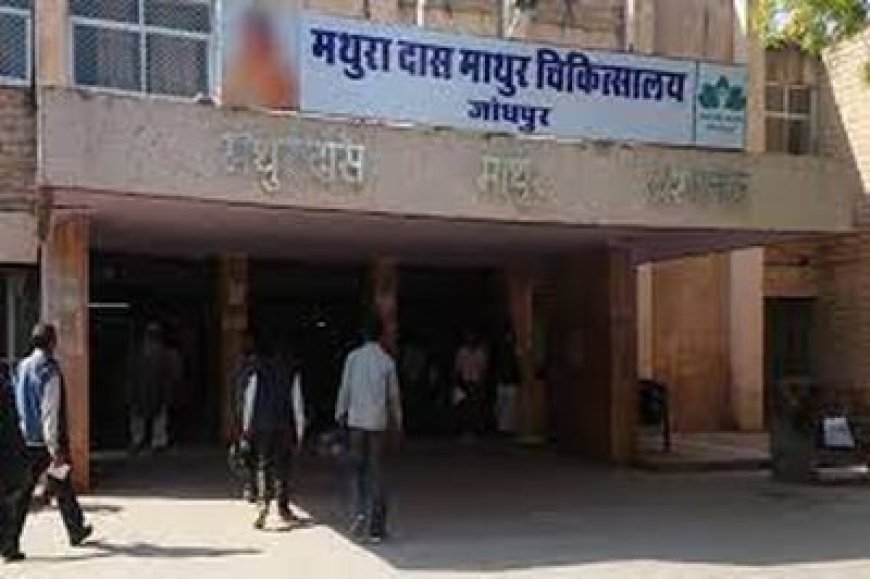
Jodhpur: A major controversy has erupted at the Mathuradas Mathur (MDM) Hospital in Jodhpur over an alleged IT procurement scam. What started as a tip-off about financial irregularities has quickly spiraled into a much larger concern: is administrative corruption compromising patient safety?
The allegations suggest that while lakhs of rupees were sanctioned for high-end computers and printers, the hospital was allegedly supplied with outdated or "condemned" hardware. In an era where digital infrastructure is the backbone of healthcare, such a lapse isn't just a financial crime—it’s a threat to life.
The Digital Backbone Of Healthcare
In modern government hospitals, the "system" is no longer just for office work. It is the pulse of the facility, managing:
• Patient Registration & OPD: The first point of contact for thousands daily.
• Lab & Radiology: Generating critical X-ray, MRI, and blood reports.
• Emergency Tracking: Real-time data for trauma cases.
• Drug Distribution: Managing the flow of life-saving medicines.
"Minutes Matter": The Human Cost of Slow Systems
The fallout of using "junk" hardware in a high-pressure environment like MDM Hospital can be catastrophic.
1. The Golden Hour Risk: For victims of heart attacks or road accidents, every second counts. If a computer hangs during registration or while fetching a blood type, the delay between the "Golden Hour" and medical intervention could be the difference between life and death.
2. Diagnostic Delays: Doctors cannot operate or prescribe without reports. If printers fail or the network crashes due to old hardware, reports don't reach the wards, and surgeries get pushed back.
3. Medication Errors: Digital records ensure the right patient gets the right dose. System failures lead to manual entries, increasing the risk of data loss or incorrect medication.
"If a patient has to wait hours for a slip or a report because the system is 'down,' we aren't just looking at a technical glitch; we are looking at a medical emergency caused by negligence." — Medical Expert perspective.
Beyond Financial Audit: A Question of Ethics
The central question remains: Did patients lose their lives because of a corrupt tender? If surgeries were delayed or emergency responses slowed down due to failing IT infrastructure, the case moves from "financial fraud" to "criminal negligence."
The Way Forward
Sources suggest that for the trust in public health to be restored, the following steps are non-negotiable:
• A High-Level Technical Audit: To verify the age and specifications of all installed hardware.
• Impact Assessment: Analyzing if any patient fatalities or complications correlate with "system downtime."
• Strict Accountability: Ensuring that those who swapped life-saving tech for substandard gear face the full force of the law.
The Bottom Line: On paper, the hospital upgraded its tech. On the ground, patients may be paying the price for old machines. In a hospital, a "system failure" isn't just an IT issue—it’s a heartbeat lost.