
'I stand by my decision', CJI DY Chandrachud openly expressed his views on the issue of gay marriage in US
CJI Chandrachud has arrived in Washington DC to participate in the 3rd Comparative Constitutional Law Discussion Program on Perspectives of the Supreme Courts of India and the United States of America. During this, he said that he stands by his minority decision in favor of civil unions of gay couples because sometimes it is a vote of conscience and a vote of the Constitution.
 Muskan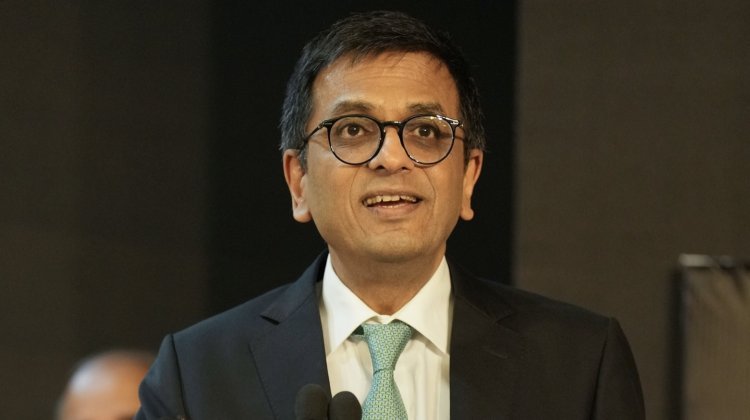
During an event in America, Chief Justice of India DY Chandrachud spoke on the issue of gay marriage. In fact, CJI Chandrachud has reached Washington DC to participate in the third comparative constitutional law discussion program on the topic 'Perspectives of the Supreme Courts of India and the United States of America'.
During this time he said that he stands by his minority decision in favor of civil unions of gay couples because sometimes it is 'a vote of conscience and a vote of the Constitution'. The event was hosted by Georgetown University, Washington, DC.
"I believe that sometimes it is a vote of conscience and the Constitution and I stand by what I have said," the CJI said. The CJI also stood by the decision of the Constitution bench of the Supreme Court while hearing petitions seeking legal approval for gay marriage. In fact, the bench has decided not to interfere in the Special Marriage Act and leave it to Parliament to decide on the issue of granting marriage equality to same-sex couples.
The CJI also reiterated his minority decision to grant rights to associations, while most of his colleagues on the bench felt that recognizing the right to form unions was again beyond the traditional domain and should be left to Parliament.
DY Chandrachud said that his conclusion of adoption rights for same-sex couples was not supported by the majority of judges on the bench. The CJI also cited 13 instances where he was in the minority while delivering important judgments.
He said, "In the unanimous decision of all five judges of the bench, we conclude that we have made considerable progress in decriminalizing homosexuality and recognizing people of the gay community as equal partners in our society." But it is within the jurisdiction of Parliament to make a law granting the right to marry."
On differences of opinion with three other judges of the bench on the issue of civil unions and adoption rights of same-sex couples, the CJI said, "Three of my colleagues felt that recognizing the right to form unions is again beyond the traditional domain and that This should be left to Parliament."
He said that his three colleagues also felt that not recognizing the right to adopt by gay unions was discriminatory, but that it was a matter that should be addressed by Parliament.